
 DailyTails Editorial
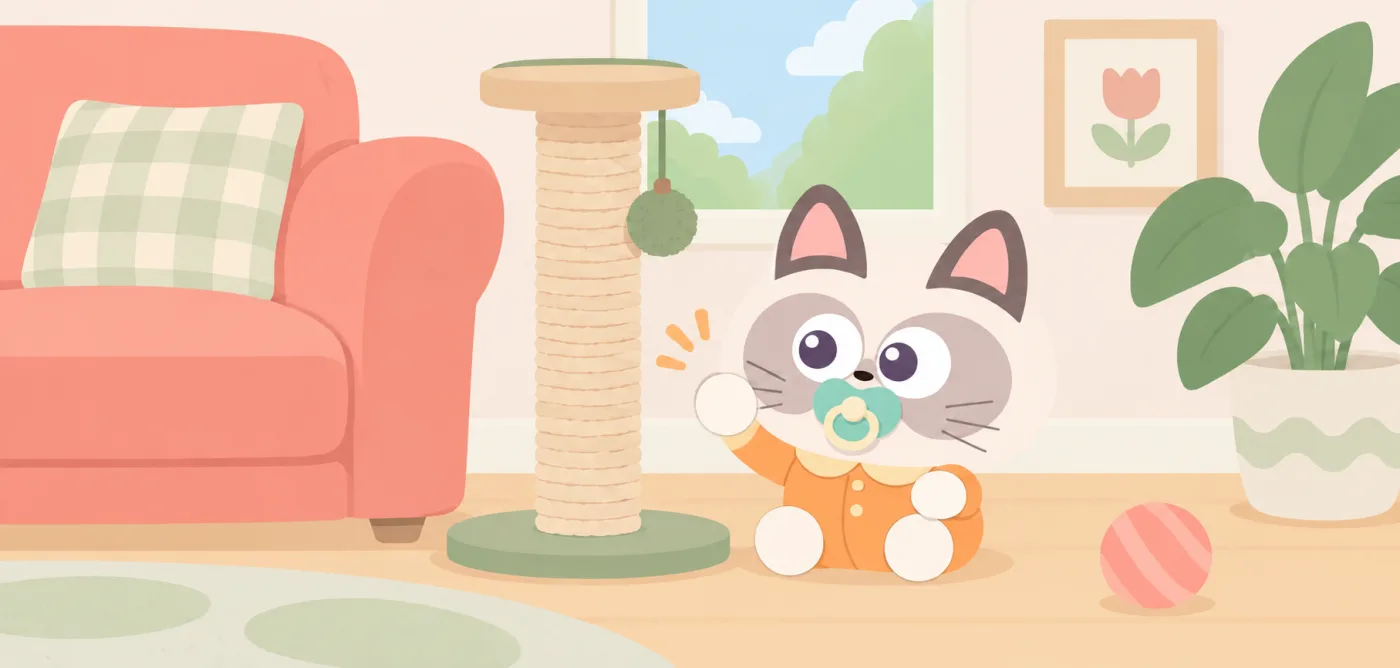
Cats scratch to stretch, maintain claws, and leave visible and scent marks. A sofa arm may be exactly the right height and location from the cat's point of view. The useful response is to offer a more attractive legal surface in that same area, then reward its use.
Place a sturdy scratcher beside the furniture or sleeping spot your cat already uses, match their preferred vertical or horizontal surface, and reward scratching there. Protect the furniture while the new habit develops.
Observe what the cat chose
Is the cat scratching vertically on a sofa, horizontally on carpet, or near a favorite nap spot? Choose a stable post or pad with a similar orientation and texture. A post that wobbles or is too short for a full stretch may be ignored. Place it directly next to the chosen furniture at first, not in a distant corner.
The FelineVMA scratching guidance notes that cats often scratch after waking. A scratcher beside a bed or favorite resting place may therefore get more use. Offer more than one option in a multi-cat home so animals do not have to compete for it.
Reward the new place and protect the old one
When you see the cat use the scratcher, reward immediately with a treat, play, or attention they enjoy. You can invite them toward it with a toy, but do not force their paws along the post. Keep the experience voluntary. Temporary furniture covers or protectors can reduce the payoff of the old surface while the new one becomes familiar.
Avoid spraying water, shouting, or frightening the cat at the sofa. That may stop scratching only while you are present and can add stress to the home. If the cat does not use the new surface, change its stability, texture, or position rather than assuming they are being stubborn.
Check the wider environment
Scratching may increase when a cat is unsettled by a move, another cat, or a change in territory. Give access to hiding, perching, play, and separate resources. Trim nails with patient training and veterinary or groomer guidance if needed. Declawing is not a routine behavior solution and can harm welfare.
For more ways to meet natural behavior indoors, try cat enrichment ideas. The goal is a home where the cat can scratch every day without losing the furniture you care about.
Make the alternative easier to choose
Put a stable scratching surface directly beside the furniture the cat already uses. Match the orientation: a cat who scratches a sofa side may prefer a tall upright post, while one who uses a rug may prefer a flat mat. The surface should not wobble and should allow the cat to stretch fully. Reward investigation and scratching on the new surface with play or treats. Keep a second scratcher near a favorite resting spot, because cats often stretch when they wake.
Protect the furniture temporarily with a cover or other cat-safe barrier while the new habit forms. Trim nails with guidance if needed, but never punish the cat for normal scratching. Check whether multiple cats have enough resources and whether the scratching is linked to stress or conflict. Move a successful scratcher gradually only after the cat uses it reliably; moving it across the room too soon may send the cat back to the sofa.
Sources
- Feline Veterinary Medical Association, Scratching Resources
- Feline Veterinary Medical Association, Training Techniques for Undesirable Behaviors
Read how DailyTails prepares its guides. This article has not been reviewed by a veterinarian.