
 DailyTails Editorial

Indoor cats can have a rich day without a room full of products. Think about the behaviors a cat would choose: watching from a high place, retreating to a hidden one, scratching, chasing, and working for food. Different cats prefer different versions, so start with options rather than a rigid schedule.
Offer short interactive play, a place to perch and hide, scratching surfaces, and a simple food search. Rotate activities and let the cat stop when they choose. Keep strings and small parts out of reach when unsupervised.
Make the space useful at different heights
Provide a stable perch or cat tree near a safe window, plus a low hiding spot such as a cardboard box. Let the cat choose distance from people and other pets. In multi-cat homes, spread resources across locations so one cat cannot guard the only resting place or route to water.
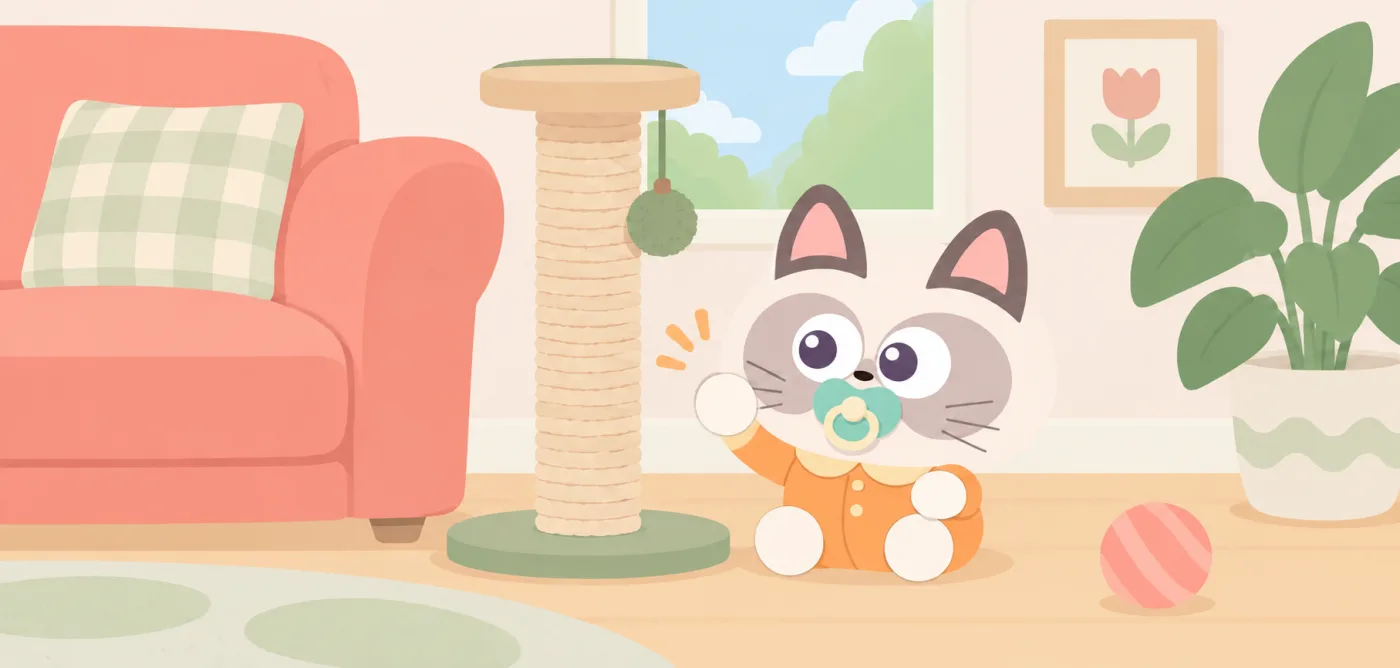
Place a sturdy vertical or horizontal scratcher where the cat already spends time. A scratcher near a sleep spot may be especially useful after waking. If furniture is the current target, offer an appealing scratcher nearby rather than punishing the cat. The ASPCA's cat-care guide describes scratching as a normal need.
Think of the room as a set of choices. A perch helps a cat watch from above, while a box or covered bed lets them retreat. Avoid placing every resource in one corner; food, water, litter, resting, and scratching areas should be available without another cat blocking the route. The Feline Veterinary Medical Association emphasizes separate resources and safe hiding places.
Play like a small hunt
Use a wand toy for a short sequence of stalking, chasing, and catching. Let the cat actually catch the toy, then end calmly. Store string toys after play to avoid swallowing risk. A kitten may want more frequent short games, while an older cat may prefer a slower toy or a brief session.
Hide a few pieces of the cat's normal food in easy places or use a simple puzzle feeder. Count the food in the daily ration. Start easy so the cat can succeed; not every cat likes a complex puzzle. The FelineVMA guidance emphasizes opportunities for play, predatory behavior, and separate key resources.
Try a small routine, then let the cat choose
You might begin with a short morning play session, leave a few easy food-search spots at a meal, and offer another brief game in the evening. Some cats will join immediately; others will watch before approaching. Stop when the cat turns away, and leave a quiet place where they can rest. You do not need to fill every hour with stimulation.
Choose toys for the cat in front of you. A confident adult may enjoy a higher perch and a faster wand toy; a shy new arrival may first use only a box and a calm window view. Keep shelves stable and window screens secure. Supervise toys with strings, feathers, or small detachable parts, then store them away. If you use food puzzles, include that food in the daily feeding plan for a growing kitten.
In a home with several cats, offer more than one route to valued spaces. A cat who controls the only doorway to the window perch or the only water bowl can turn a well-meant enrichment setup into a source of stress. Spread options around the home and watch how each cat uses them.
Use the cat's response to choose the next idea
Rotate a couple of toys, change a cardboard box, or move a perch safely rather than adding everything at once. Watch whether the cat approaches, plays, and rests afterward. A cat who hides, stops eating, or avoids the litter box after a change may need less stimulation or a veterinary check.
Enrichment is not a substitute for healthcare or a solution to all behavior problems. Its value is giving the cat choices that fit their body and temperament. One good five-minute game can matter more than an expensive toy they never use.
If a cat suddenly withdraws from activities they normally enjoy, stops eating, seems painful, or changes litter-box habits, speak with your veterinarian rather than assuming they are bored. You can change the environment gradually after health concerns have been considered. For a newly adopted cat, the first-week guide starts with a quiet room and predictable access to essentials.
Sources
- Feline Veterinary Medical Association, Setting Up the Environment for Success
- American Society for the Prevention of Cruelty to Animals, General Cat Care
Read how DailyTails prepares its guides. This article has not been reviewed by a veterinarian.