
 DailyTails Editorial
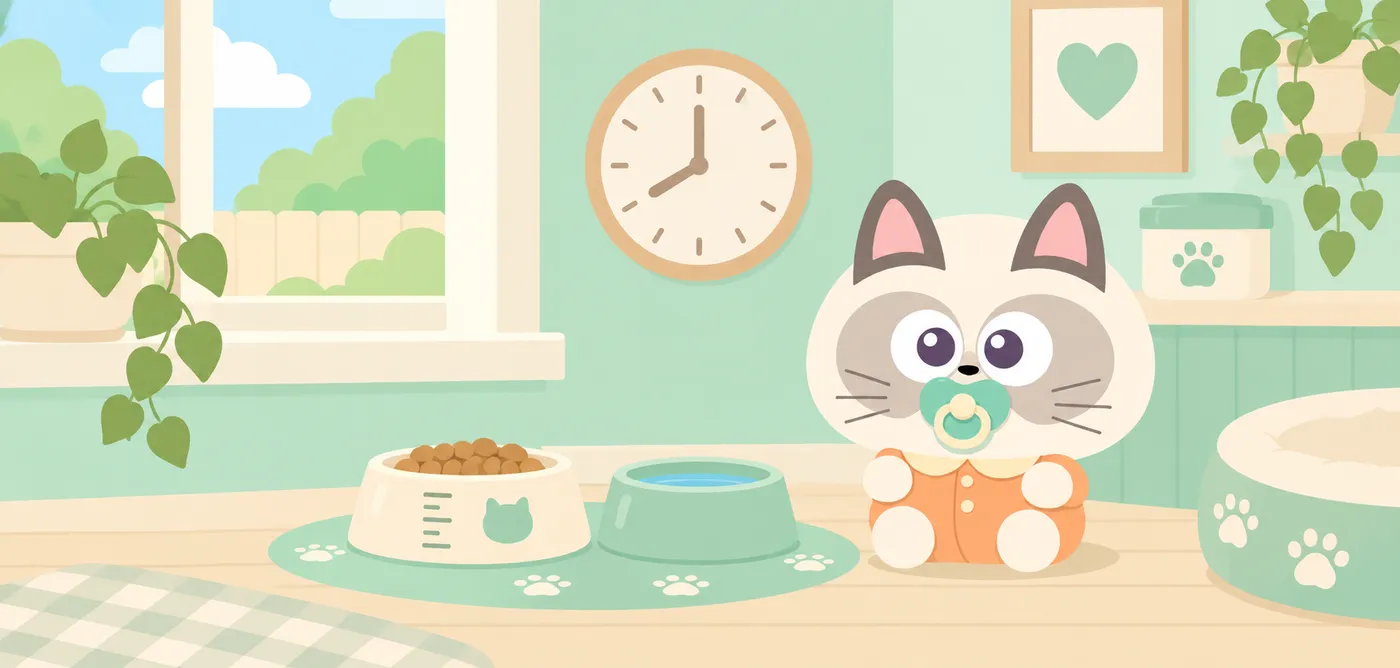
A kitten's meal plan depends on age, current weight, health, and the food's calorie content. An eight-week-old kitten and a nearly grown adolescent do not need the same number of meals or portion. Use the package as a starting point and your veterinarian's assessment to adjust.
Offer a complete diet formulated for kitten growth in measured meals, and ask your veterinarian to adjust portions as the kitten grows. Keep fresh water available and call promptly if a young kitten is not eating.
Choose food intended for growing kittens
Read the nutritional adequacy statement on the label. The food should be complete and balanced for growth or all life stages. Ask the prior caregiver what the kitten has been eating and keep it familiar at first if possible. Change to another food gradually when there is no urgent medical reason to switch.
If the kitten was orphaned, is not yet fully weaned, or has an illness, do not use a general feeding schedule. Those situations need a veterinarian or experienced rescue's specific plan. Cow's milk is not a substitute for a kitten feeding plan.
Keep the exact product name and package for your first veterinary visit. Foods that look similar can differ in calories, so a portion copied from someone else's kitten may not fit yours. Ask the veterinarian to review growth and body condition, especially if the kitten was small at pickup or is recovering from illness.
Divide the day's food into manageable meals
Measure a daily amount based on the food and veterinary advice, then divide it into meals. VCA's cat feeding guidance notes that three to four smaller meals can suit a young kitten's small stomach. As the kitten grows, your vet can advise when to change the frequency. Count treats and food puzzles toward the day's total.
Feed in a quiet place away from the litter box. In a multi-cat home, make sure the kitten can eat without being pushed away by an adult cat. Keep fresh water accessible, and use the same bowl location while they learn the home.
Put meals into an ordinary day
Start with regular times that someone can manage. If your veterinarian recommends several small meals, divide the agreed daily allowance among them rather than refilling the bowl whenever it looks empty. Offer a clean bowl, let the kitten eat without crowding, and note how much remains. A few pieces from the measured ration can also become a gentle food-search game.
Do not make the clock more important than the kitten. A very young kitten, one with a medical condition, or one who is not maintaining weight needs an individual plan. If your household cannot provide a recommended midday meal, ask the veterinary team about practical options. An automatic feeder can help some families, but it cannot tell you whether one kitten in a multi-cat home actually ate.
Change portions as growth and food change, using the package and the veterinarian's assessment together. A weekly note of the food, amount offered, amount eaten, and weight can be more useful than a rigid chart copied from the internet. Treats and puzzle food still count toward the day's total; for ways to make meals interesting without buying many gadgets, see indoor cat enrichment ideas.
Watch the pattern, not only the empty bowl
Note what you offer and what remains, along with weight checks, stool, activity, and drinking. A kitten who suddenly refuses food, seems weak, vomits repeatedly, or has diarrhea should be assessed promptly. Young kittens can become unwell faster than healthy adult cats, so avoid waiting for an arbitrary number of missed meals.
Use the new kitten checklist to collect records for the first vet visit. A useful feeding schedule makes ordinary growth easier to support and unusual changes easier to see.
If a young kitten has not eaten as expected, call your veterinarian promptly for advice suited to their age and history. Weakness, repeated vomiting, or trouble drinking needs urgent assessment. The feeding log helps describe what changed, but it cannot tell you why.
Sources
- VCA Animal Hospitals, Feeding Growing Kittens
- VCA Animal Hospitals, Feeding Times and Frequency for Cats
Read how DailyTails prepares its guides. This article has not been reviewed by a veterinarian.