
 DailyTails Editorial

Putting two cats together and hoping they “work it out” can create tension that is hard to undo. Cats use scent and access to resources to feel secure. A gradual introduction lets each cat keep a safe place while they learn that the other cat predicts ordinary, pleasant things.
Begin with a separate transition room for the new cat. Exchange scents and build calm associations before visual contact; then use a barrier and brief supervised meetings. Slow down whenever either cat shows distress.
Prepare separate territories
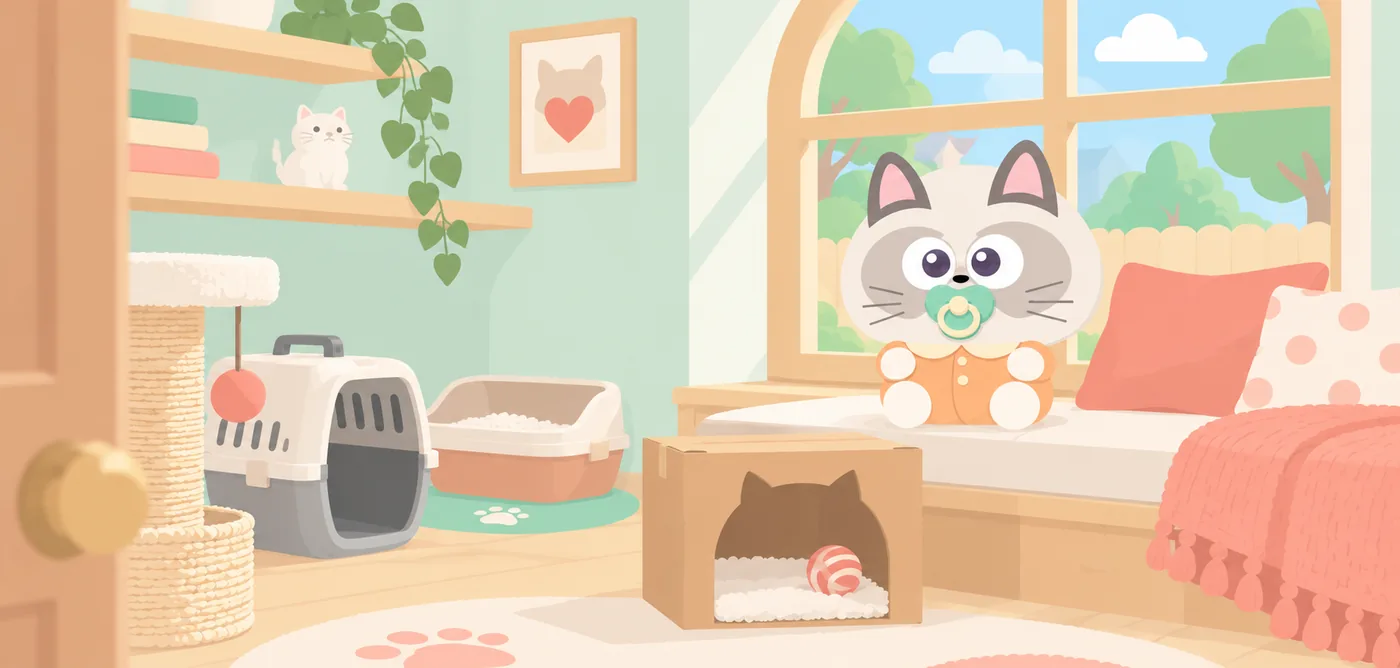
Give the newcomer a transition room with food, water, litter, resting and hiding places, and scratching surfaces. Keep the resident cat's favorite resources available in their usual places. If either cat has an unknown health history, ask your veterinarian what check is needed before contact. Do not carry the new cat directly into the resident cat's space.
Spend time with each cat separately. Let the newcomer settle enough to eat, toilet, rest, and explore their room before adding introductions. A kitten's energy may be overwhelming to an older cat, so plan separate play and rest opportunities.
Move from scent to sight
Exchange bedding or other scent-bearing items between rooms without forcing a cat to approach them. Feed or play at a comfortable distance from the closed door. If both cats remain relaxed, gradually move activities closer. The FelineVMA guide lays out steps including scent transfer, separate exploration, and controlled visual access.
Use a secure see-through barrier for short visual sessions when both cats are ready. Reward calm behavior and let either cat leave. Hissing is information that one cat needs more distance; do not punish it. Go back a step if there is hard staring, chasing, blocking, or fear.
Keep direct meetings brief and supervised
When barrier sessions are calm, allow short supervised time together with room to separate. Keep food, litter, beds, and high-value spots spread out so one cat cannot control all routes. End before tension rises and continue providing separate territories. Do not leave them together unsupervised until repeated meetings have gone well.
The process may take days or weeks, and some cats need a professional plan. If either cat stops eating, avoids litter, hides persistently, or conflict escalates, talk to your veterinarian or a qualified feline behavior professional. Success can mean peaceful coexistence; it does not require cuddling.
Prepare the rooms before opening the door
Give the new cat a private room with food, water, a litter box, a bed, a hiding place, and a scratching surface. Keep the resident cat's routine and resources available elsewhere. Let each cat smell an item from the other's space, then reward calm behavior on opposite sides of a closed door. Move food bowls nearer the door only if both cats continue eating comfortably. Visual contact through a barrier comes later, for short sessions that end before either cat becomes tense.
A hiss or retreat is information to add distance, not a reason to force a meeting. Do not hold the cats together or leave them unsupervised until relaxed coexistence is well established. Provide more than one route to food, water, and litter so one cat cannot block the other. If chasing, guarding, or persistent fear develops, return to full separation and ask your veterinarian or a qualified feline behavior professional for help.
Sources
- Feline Veterinary Medical Association, Step-by-Step Cat Introduction Guide
- BC SPCA, Introducing Your New Cat to Your Resident Cat
Read how DailyTails prepares its guides. This article has not been reviewed by a veterinarian.