
 DailyTails Editorial
A vaccine chart can help you recognize names on a record, but a kitten's actual plan depends on age, previous doses, health, lifestyle, and local law. Do not assume a shelter record is complete or that an indoor kitten needs no vaccines. Bring what you have and ask your veterinarian to fill the gaps.
Kittens usually need a series of core vaccinations rather than one visit. Your veterinarian should review FVRCP, rabies requirements, and feline leukemia risk, then record the next dates based on age and history.
Understand the common vaccine names
The AAHA/AAFP feline guidelines describe core protection against feline panleukopenia, herpesvirus, and calicivirus, often grouped as FVRCP. Rabies also belongs in the discussion and may be legally required where you live. Feline leukemia virus vaccination is considered core for kittens and young cats under one year in these guidelines, with later decisions based on risk.
Your veterinarian may recommend additional protection based on other cats, boarding, outdoor access, and local exposure. A kitten needs a series because the timing of protection varies as maternal antibodies decline. One early dose does not necessarily finish that series.
Bring dates and ask concrete questions
Bring every document from the shelter, breeder, foster caregiver, or previous home. Ask what was given, the product name, the date, and what comes next. If records are missing, tell the vet they are unknown rather than estimating. Ask whether testing, parasite prevention, or other care should be scheduled at the same visit.
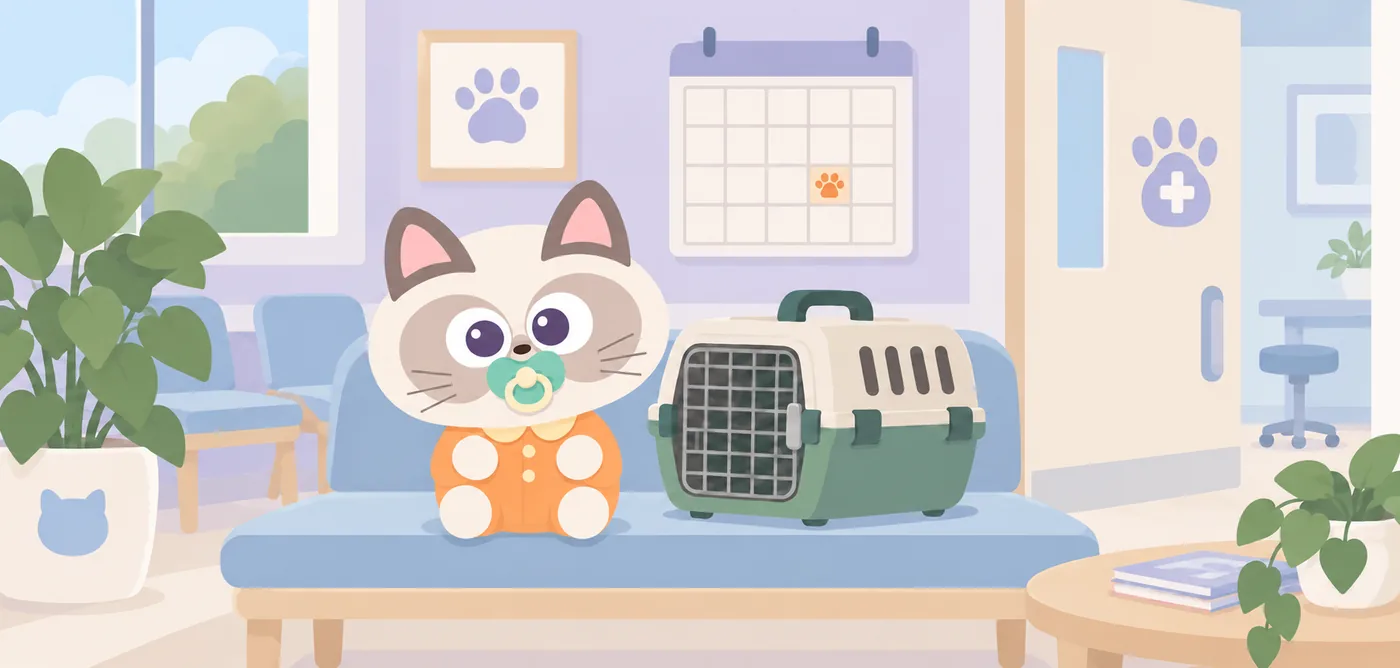
Write the next appointment in a calendar and keep a copy of the updated record. It may be needed for boarding, travel, or an emergency clinic. US states and Canadian provinces can differ in rabies rules, so use local veterinary advice rather than a single internet chart.
Match exposure to the kitten's real life
Tell the vet whether the kitten may go outdoors, meet unfamiliar cats, or live with cats whose health history is unknown. Ask when introductions and shared spaces are appropriate. If the kitten is sick or had a reaction after a previous dose, discuss that before the next visit.
The new kitten checklist includes the records and questions to gather before pickup. The safest schedule is one you can understand, follow, and verify in your kitten's own record.
Turn the schedule into a clinic plan
Bring the kitten's adoption records to the first appointment, even if they are incomplete. Ask the veterinarian which doses have already been given, what remains, and how the timing changes with age and local requirements. Discuss whether the kitten will live indoors, go outdoors, travel, board, or meet other cats. Those details affect the plan. Write the next appointment date on a calendar before leaving and keep a photo of the updated record.
Ask what reactions after vaccination need a call and what to do if a visit is missed. Do not assume an online schedule proves the kitten is fully protected; the exact products, intervals, and individual risk matter. If another cat lives at home, tell the clinic about that cat's health and vaccine history. The appointment is also a chance to discuss parasite prevention, diet, and safe introductions, so bring questions beyond the injections.
Sources
- American Animal Hospital Association, Feline Vaccination Guidelines
- American Animal Hospital Association, Core Vaccines for Pet Cats
Read how DailyTails prepares its guides. This article has not been reviewed by a veterinarian.