
 DailyTails Editorial
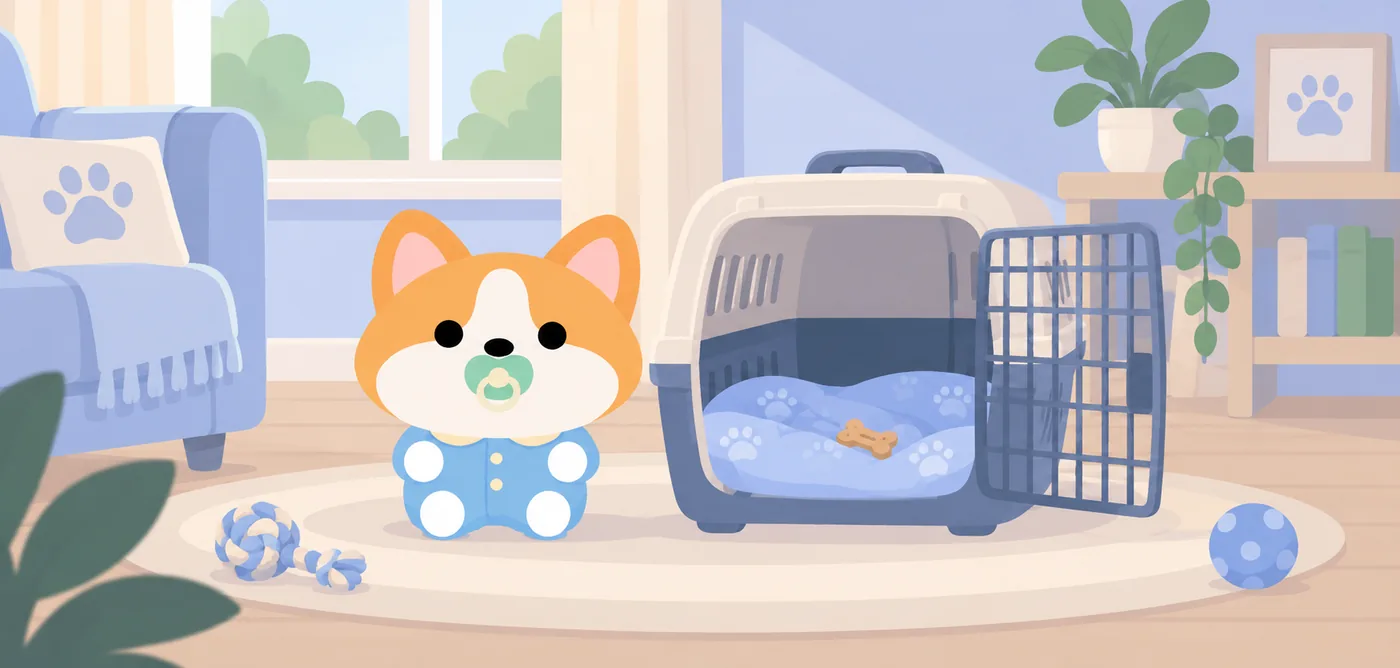
A crate can help a puppy rest and make supervision easier, but comfort is learned. The goal is a puppy who can enter and settle without being forced. A crate is not a treatment for separation anxiety and should never become the place a puppy is sent for punishment.
Leave the crate open at first, pair it with pleasant experiences, and close the door for only brief, comfortable moments. If your puppy panics, back up to an easier step and consider a pen or gated room with professional guidance.
Choose the space before teaching the door
The puppy should be able to stand, turn around, and lie down comfortably. Put the crate in a lived-in but not noisy area, with safe bedding if your puppy does not chew it. A pen or gated room may suit a puppy who needs more room or becomes distressed by a crate. Remove collars or other items that might catch when the puppy is unsupervised, and ask your vet about safe chew choices.
For the first sessions, prop the door open. Toss a treat just inside, let the puppy leave, and repeat. Feed a meal nearby and then, if they are willing, inside. Do not push them in or close the door while they are still worried about entering.
Add the closed door in tiny steps
When the puppy walks in readily, close the door for a moment while they enjoy food, then open it before they become upset. Repeat and add time gradually. Sit nearby at first, then briefly move a little farther away. Keep success easy enough that the puppy can relax, not merely stop protesting.
Watch the difference between a short complaint and distress. Frantic escape attempts, heavy panting, drooling, or escalating vocalization mean the exercise is too hard. Open the door safely, return to an easier step, and ask a qualified reward-based trainer or veterinary behavior professional for help if distress persists. The AKC crate guide also warns that dogs with separation anxiety can injure themselves trying to escape.
Fit crate time into a real puppy day
Take the puppy to the toilet spot before and after a crate session. Include play, social time, meals, and ample rest outside it. A crying puppy at night may need a bathroom break; do not apply a blanket “ignore the crying” rule. For a full bedtime plan, read the first-night guide.
If the puppy relaxes in a pen but not a crate, that is useful information. Keep the safe setup that works while you teach the crate at a slower pace. A successful crate lesson is a calm choice repeated over time, not a deadline met on the first night.
A seven-day practice plan you can slow down
On the first day, leave the door open and reward any voluntary approach. On later days, put a treat or part of a meal just inside, then farther back only if the puppy stays relaxed. Once entering is easy, practice a one-second door closure while you sit beside the crate. Open it before the puppy worries. Add a few seconds over several successful sessions, not every repetition. Practice a short step away only after the door itself has become ordinary.
Write down the longest calm step rather than the longest time you managed to keep the door closed. If the puppy scratches, pants hard, drools, or refuses food, shorten the next session. Arrange toilet and play breaks around training so the puppy is not asked to settle while uncomfortable. If a crate continues to cause panic, use a safe pen or room and ask your veterinarian or a qualified behavior professional for a plan. There is no benefit in meeting an arbitrary seven-day deadline.
Sources
Read how DailyTails prepares its guides. This article has not been reviewed by a veterinarian.