
 DailyTails Editorial
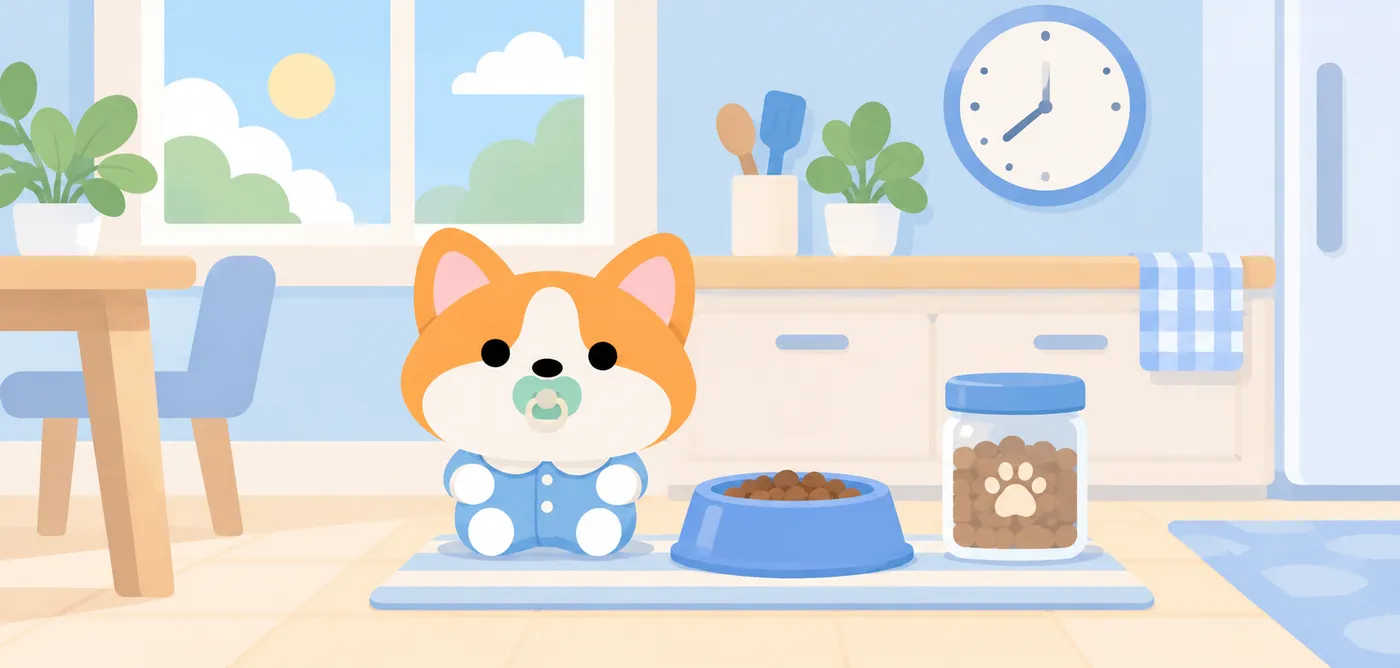
Feeding charts can be useful starting points, but puppies differ widely in size and growth rate. The same cup measure can also hold different calories in different foods. A practical schedule starts with the food's daily amount, divides it into meals, and checks how the puppy is growing with a veterinarian.
Feed a complete diet labeled for growth in measured meals, with the number and portion size adjusted to your puppy's age, size, body condition, and veterinary plan. Keep fresh water available and record appetite changes.
Choose food for growth, then set the day
Look for a nutritional adequacy statement showing that the food is complete and balanced for growth. Large-breed puppies may need a food appropriate for their expected adult size. Bring the exact product name and amount to your first vet visit. If the previous caregiver used a different food, ask how to transition gradually rather than changing everything on pickup day.
Many young puppies do well with several smaller meals. VCA's feeding guidance notes that three to four meals can help a puppy with a small stomach, but age and health matter. Your veterinarian can tell you when to reduce meal frequency. Keep meal times predictable enough to notice appetite, stool, and toilet patterns.
There is no single schedule that fits an eight-week-old toy breed and a six-month-old large breed. If your puppy came with a written feeding plan, start there and ask your veterinarian how to adjust it. If you do not know what the puppy has been eating, contact the previous caregiver rather than making several changes on the first day home.
Measure the total, not just each bowl
Start from the daily amount on the food label and your vet's advice, then divide it across meals. Include training treats and food-filled toys in the day's total. Weighing food can be more consistent than scooping by eye. Watch body condition and growth over time; do not try to make a puppy grow faster by overfeeding.
Fresh water should be available. Note the amount eaten, especially during the first weeks, so a skipped or unusually small meal is visible. A potty log can sit beside the feeding log because meals often predict toilet breaks.
Make a simple day you can actually follow
Choose meal times your household can repeat. For a puppy whose veterinarian recommends three meals, breakfast, midday, and evening can be an easy starting pattern. Offer each measured portion in a clean bowl, then record what was actually eaten. A food puzzle or training session can use part of that same daily allowance rather than adding an uncounted extra meal.
Take the puppy to their toilet spot after eating and when they wake from a nap. The exact timing will vary; the useful connection is that meals and waking are predictable chances to offer a break. If your workday makes a midday meal difficult, arrange help or discuss a different schedule with your veterinarian rather than simply skipping it.
Keep a short note of the food name, daily amount, meal times, treats, stool, and appetite. Bring it to the first veterinary visit. You can then adjust the plan as the puppy grows, instead of treating the first amount on a bag as a permanent prescription. The same gentle rhythm applies to rest; see the puppy sleep schedule for a way to fit naps around meals and activity.
Ask for help when the pattern changes
A sudden loss of appetite, repeated vomiting, diarrhea, marked tiredness, or trouble drinking needs veterinary advice. Very young or small puppies can become unwell quickly; do not rely on a generic “wait two days” rule for them. The vet may want the food package, records, and a description of recent meals.
The schedule's purpose is not to hit an internet chart perfectly. It is to support steady growth and give you an early signal when this puppy's normal pattern changes.
If a puppy misses a meal but otherwise seems well, call your veterinary team for advice appropriate to their age, size, and health history. If they are weak, repeatedly vomiting, or unable to keep water down, seek prompt care. This guide helps you notice a change; it cannot diagnose its cause.
Sources
- American Animal Hospital Association, Canine Life Stage Puppy
- VCA Animal Hospitals, Feeding Growing Puppies
Read how DailyTails prepares its guides. This article has not been reviewed by a veterinarian.