
 DailyTails Editorial
A new puppy does not need a cart full of gadgets. Before pickup, they need a safe way home, a small place to rest, food they already know, water, and a plan for their first veterinary visit. This checklist starts there. You can buy the rest after you have met the puppy in your own home.
If pickup is tomorrow, focus on the essentials and the handoff questions. The interactive checklist below is also printable, so you can take it with you.
- Prepare one resting area, familiar food and water, safe transport, an ID and leash, and cleanup supplies. Collect health records and book a vet exam. Leave the big shopping decisions until you know your puppy's size and habits.
Start with what the first day actually needs
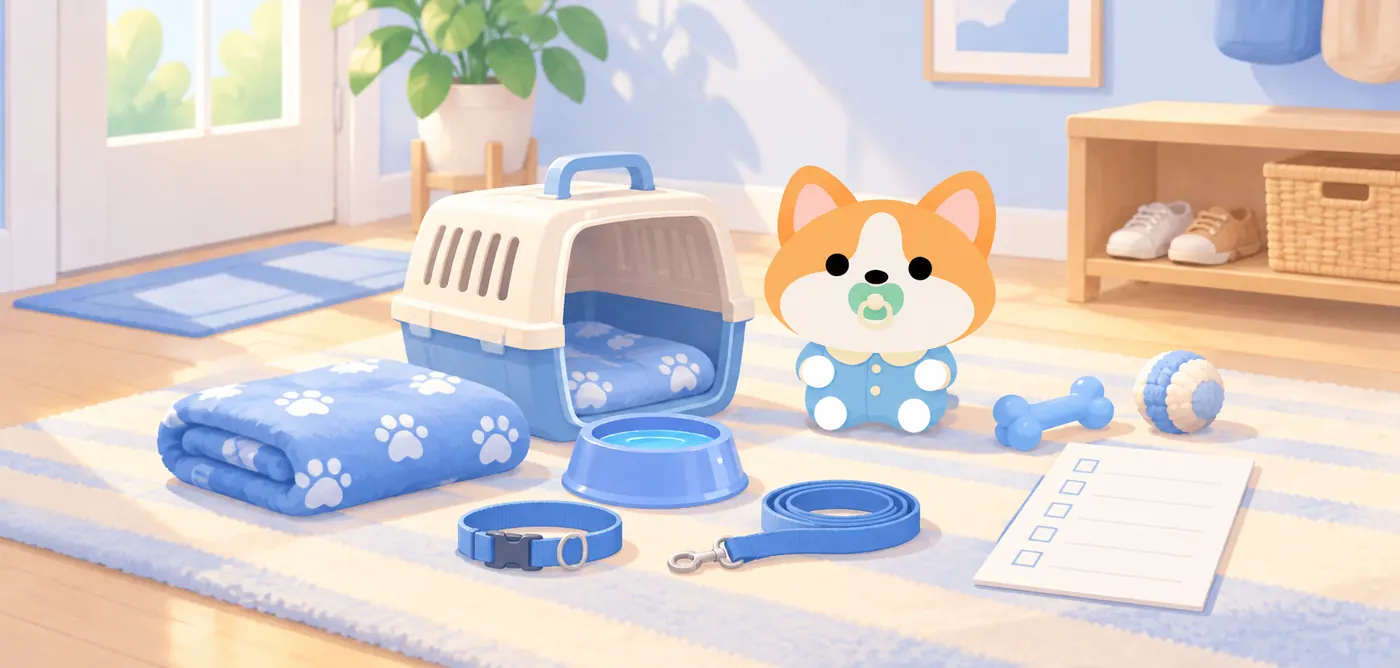
Food and water: Ask what food the puppy currently eats and bring home enough to keep meals familiar while they settle. Get two easy-to-clean bowls and keep fresh water available. If you want to change food, discuss what suits your puppy with your vet and make the change gradually.
Rest and boundaries: Choose a washable bed or blanket and one quiet area. A correctly sized crate, exercise pen, or baby gate can help you manage space; a crate should let the puppy stand, turn around, and lie comfortably. It is a place to introduce gently, not a solution for leaving a puppy alone all day.
Outside and cleanup: Have a properly fitted collar or harness, a leash, an ID tag with a reachable phone number, poop bags, and a pet-safe cleaner. Add a few puppy-sized toys or chews you can supervise. If the puppy already has a familiar blanket or toy, ask to bring it home.
You can wait on a large toy collection, specialty feeders, expensive beds, and a wardrobe. Watch how your puppy eats, sleeps, chews, and grows before buying more.
Make one small area ready, then check it at puppy height
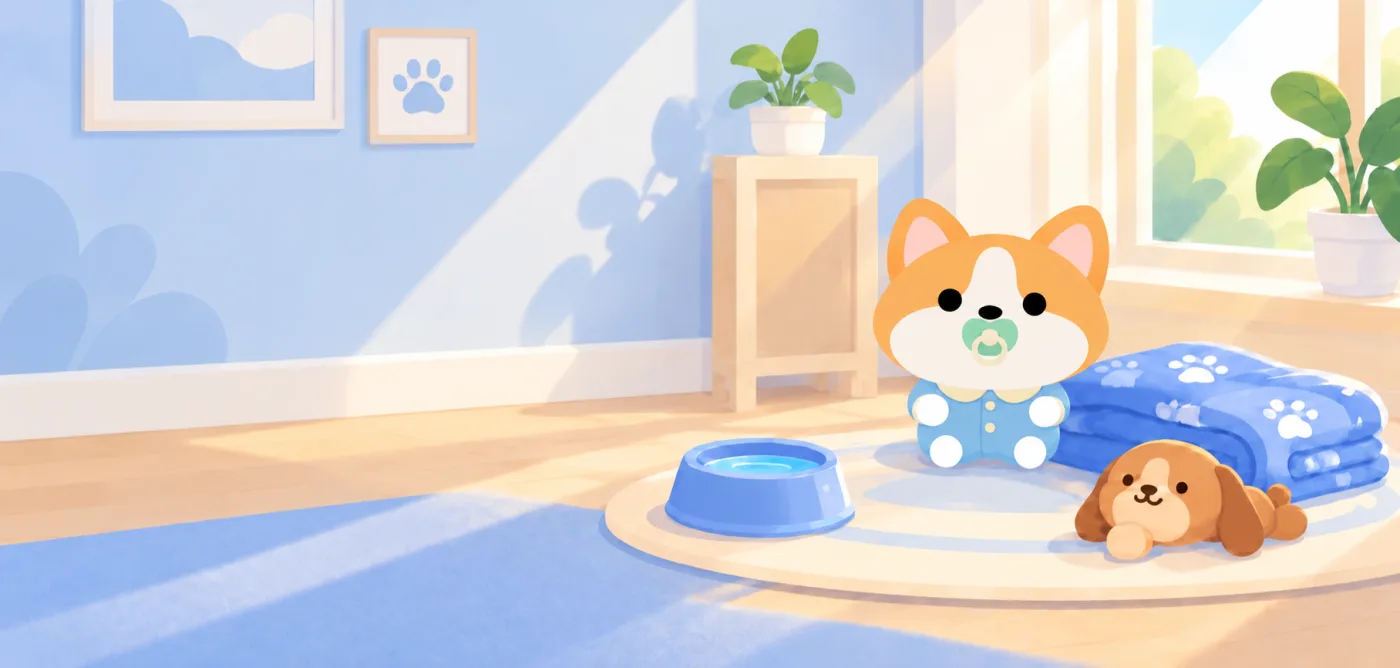
Put the bed, water, and a couple of safe toys in a space where the puppy can rest without constant visitors. Decide where toilet breaks will happen and how you will get there quickly. If you have children or other pets, plan a way to give everyone their own space at first.
Walk through the area as if you were a curious puppy. Put medications, cleaners, laundry products, pest baits, and small objects behind closed doors. Move cords out of reach, secure bins, check windows and gates, and look up whether accessible plants are safe for dogs. Repeat the sweep as your puppy grows tall enough to reach new places.
Know the route to your usual vet and the nearest emergency clinic. Save their numbers now. A setup that is easy to supervise is more useful than trying to make the whole house puppy-ready in one day.
Ask for the routine behind the puppy
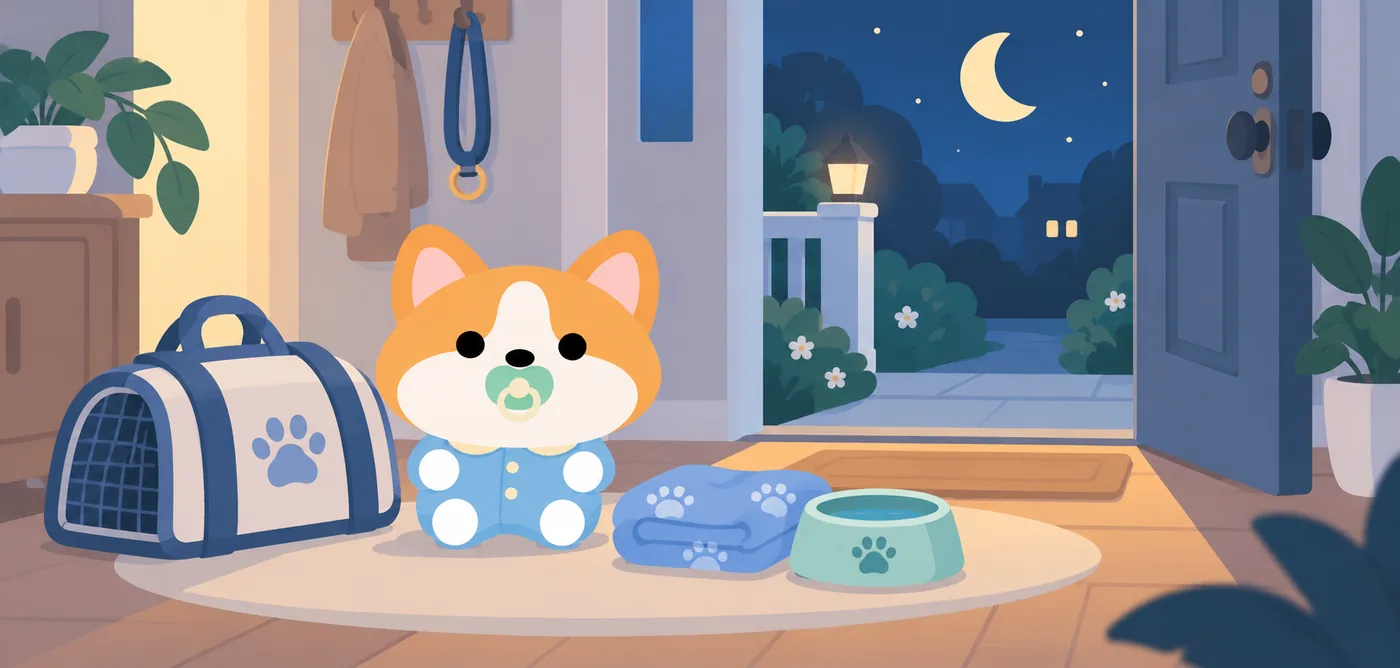
Bring a secure carrier or other appropriate restraint for the journey, a towel or washable blanket, and water for a longer trip. Have someone focus on driving while another person handles the puppy if possible. Ask the shelter, rescue, breeder, or foster caregiver these questions before you leave:
Ask for copies of the records, not just a verbal summary. When you get home, show the puppy their toilet spot and resting area, then give them time to explore a manageable space. For a fuller day-by-day plan, read Your Dog's First Week at Home.
Book the vet visit and bring the history you have
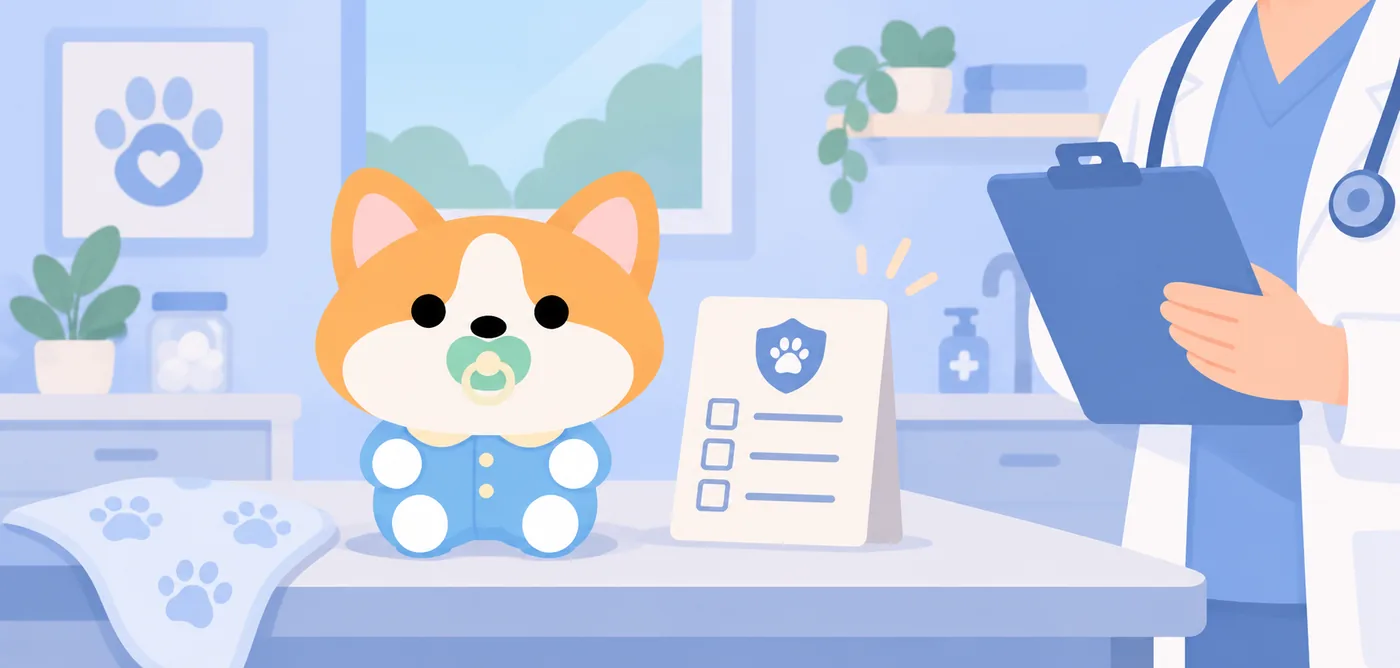
Choose a local veterinarian before pickup and arrange an exam soon after your puppy comes home. Bring the vaccination and deworming records, medication details, microchip information, and the food name. Note any questions about appetite, stool, sleep, behavior, parasite prevention, and safe activities in your area.
Your vet can turn those records into a plan for this puppy. Vaccine timing, parasite risks, diet, and when to visit shared dog spaces depend on age, history, and location. You do not have to settle those decisions from a generic shopping list.
Three things you can decide later
Do I need puppy pads?
It depends on your home and toilet plan. Decide where you want your puppy to learn to go, how you will get them there, and who can take them out. Pads can be useful in some situations, but they are not a substitute for a consistent plan.
Should I buy a crate?
A crate, pen, or gated room can make supervision easier. Choose a space that fits your puppy and introduce it gradually. If the puppy is distressed, slow the process and ask for qualified training help rather than forcing longer stays.
Do I need every toy and grooming tool now?
No. Start with a few size-appropriate toys and a basic brush if their coat needs one. Add tools after you have seen what your puppy enjoys, what they chew, and what their vet or groomer recommends.
Your before-pickup checklist
Save your progress in this browser or print a copy to take along.
At home
For the journey
For the first days
contact your veterinarian or an animal poison service promptly. Keep the product package or plant name available if you can do so safely.
Sources
- BC SPCA: Bringing a new dog home — supplies, a manageable space, and a familiar routine
- ASPCA Animal Poison Control Center: Home safety checklist — household hazards to check before arrival
- VCA Animal Hospitals: Preparing for your dog's first veterinary visit — the first veterinary visit and previous medical records
- American Kennel Club: New puppy checklist — basic gear and practical boundaries
Read how DailyTails prepares its guides. This article has not been reviewed by a veterinarian.