
 DailyTails Editorial
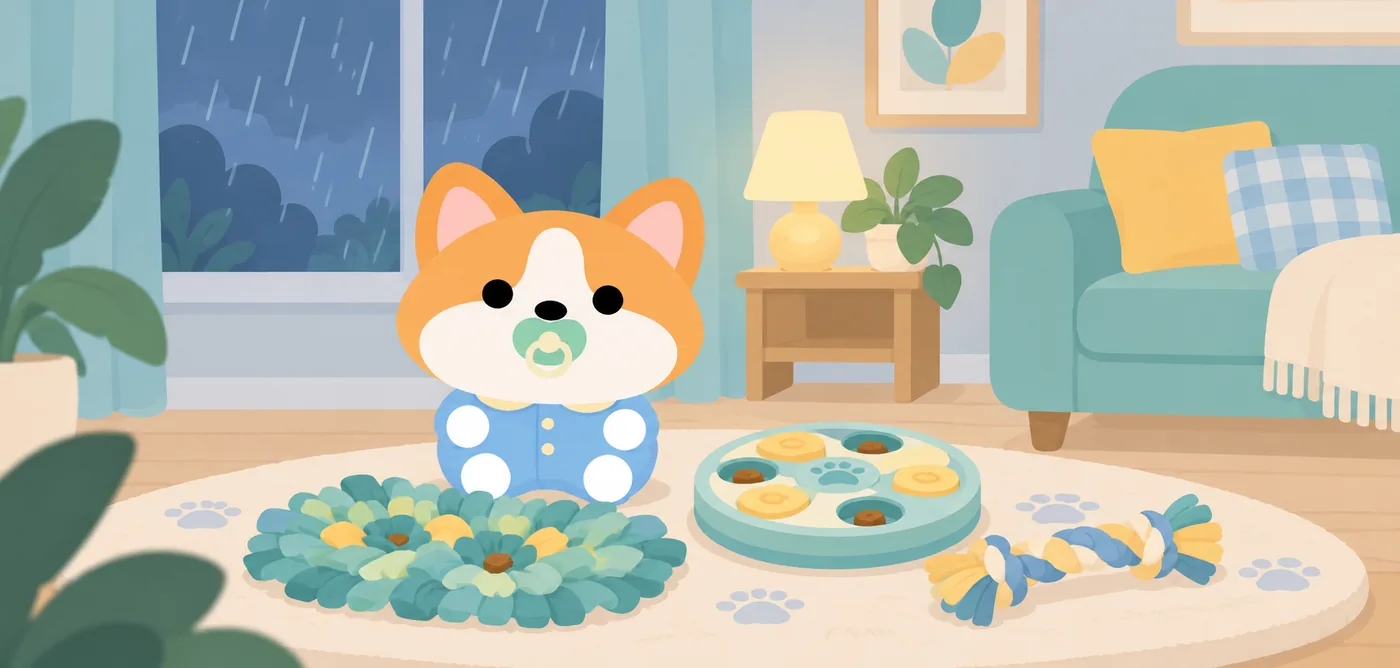
An indoor day does not require expensive toys or nonstop entertainment. Dogs often benefit from chances to use their nose, work for part of a meal, practice familiar skills, and then rest. Start with a game that is easy enough to succeed and adjust it to the dog's mobility, chewing style, and appetite.
Scatter part of a meal for sniffing, hide a few treats, practice a short known cue, or offer a safe food puzzle. Choose one activity your dog enjoys and stop before they become frustrated or overtired.
Turn one meal into a sniffing game
Scatter a portion of dry food across a clean floor or inside a safe snuffle mat and let your dog search. You can hide a few pieces in plain sight first, then make the search a little harder. If your dog guards food, lives with other pets, or eats non-food objects, give them a separate safe space and ask for professional advice when needed.
The ASPCA's enrichment guide suggests food puzzles and scent games. Count puzzle food as part of the normal daily amount. Supervise new devices and remove anything the dog breaks or tries to swallow.
Teach one useful thing for a few minutes
Practice a familiar cue such as coming when called, going to a mat, or choosing to check in. Reward small successes and finish before the dog loses interest. A puppy may need a very short session followed by a nap. An older dog with limited mobility can still enjoy nose work or a simple hand target.
Try a “find it” game with a treat placed in an obvious spot, then gradually hide it behind a chair or under a safe object. Let the dog work at their own pace. If they become frustrated, make the next search easier rather than repeating the hard version.
Include calm and choice
Chewing an appropriate item, watching the world from a safe window, or resting in a quiet place can be meaningful parts of the day. Rotate toys instead of leaving everything out at once. If weather allows, a short sniff-focused walk can complement indoor games; it need not be a fast exercise session.
Enrichment does not replace medical care or solve separation distress by itself. A dog who cannot settle, suddenly loses interest in food or play, or becomes distressed when alone may need a veterinary or behavior assessment. On a hard day, one five-minute scent game is enough to begin.
Sources
- American Society for the Prevention of Cruelty to Animals, Canine DIY Enrichment
- American Society for the Prevention of Cruelty to Animals, At-Home Pet Enrichment
Read how DailyTails prepares its guides. This article has not been reviewed by a veterinarian.